
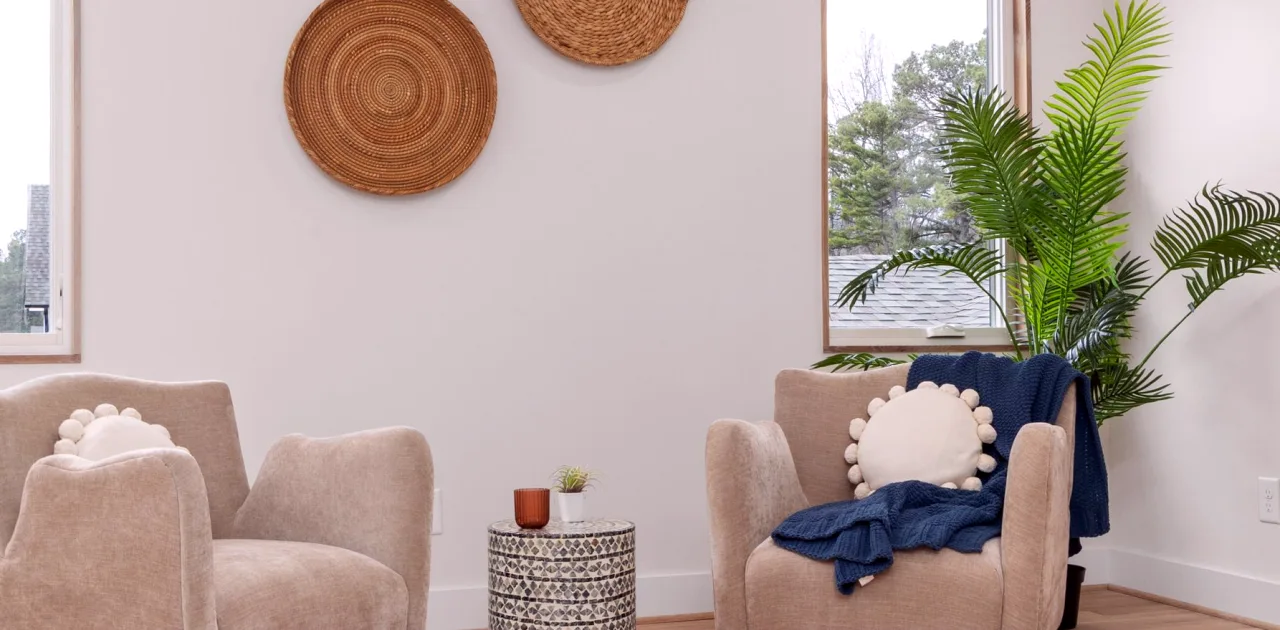
Seating Distances and Angles to Plan Before the Winter Recording Season
Mid autumn is a good moment to rethink where chairs sit. Marisol Vega walks through seating distances, angles and sightlines for one, two or three people on camera.
Why autumn is the right time to move the chairs
As the evenings draw in, many hosts return to a regular recording routine, and the room often looks different from how it did in summer. The light comes lower, the heating goes on, and people arrive in heavier clothes. All of that changes how much space a guest needs and how the seating reads on camera.
I suggest treating these weeks as a reset. Before you book guests for the colder months, sit in each chair yourself and watch the camera view. Notice whether the chairs still feel balanced in the frame, whether anyone is crowded against a wall, and whether the floor space between seats looks intentional. A small change now saves a long fix halfway through a season.
Seating distance for one, two or three people
A solo host needs the least planning, but distance still matters. Sitting too close to the lens makes a room look cramped, while sitting too far back leaves a lot of empty floor in the frame. Aim for a comfortable arm's reach plus a little more between the speaker and the camera, then adjust by eye on the monitor.
For two people, the gap between chairs sets the tone of the conversation. Close enough that voices carry naturally, far enough that nobody feels hemmed in. For three, a shallow curve works better than a straight line, because it keeps everyone the same distance from the lens and from each other. Measure the gaps once, write them down, and mark the floor lightly so the arrangement can be repeated.
- One person: an arm's reach plus a little, then adjust on the monitor
- Two people: chairs close enough for natural speech, not touching
- Three people: a shallow curve rather than a straight line
Angles that keep faces open and shoulders relaxed
Chairs set square to the camera tend to look stiff, as though the guests are facing a panel. Turning each chair slightly inward, toward the other person, gives a three-quarter view of the face and a more natural posture. A turn of about thirty degrees is usually enough; more than that and one person starts to look away from the lens.
Swivel seats are tempting but can work against you, since guests drift and the frame drifts with them. If you use them, lock them or choose fixed chairs for interviews. Armrests also matter in autumn, when sleeves are bulkier. Low or open arms leave room for elbows and keep the shoulder line tidy. Check the angle from the camera position, not from where you stand.
Sightlines: who looks at whom, and where the eyes land
A sightline is the path a person's eyes take while they talk. In a good set, the host looks at the guest, the guest looks back, and neither glances at the camera by accident. Place any monitor, notes or clock close to the lens so a quick look does not pull the eyes far off axis.
Think about what sits along those lines too. A bright lamp, a window or a busy shelf directly behind the other person invites the eye to wander. Keep the area where eyes naturally rest calm and low in contrast. In autumn, when the daylight shifts quickly, check the sightline at the actual hour you record, because a window that was harmless at noon can become a distraction by late afternoon.
Giving the furniture room to breathe
It is easy to fill a room because it feels bare, then end up with chairs that nearly touch a side table and a plant. Leave clear floor around each seat, roughly enough to walk past without turning sideways. That visible breathing space makes the frame look composed rather than packed.
Scale deserves a second look as well. A deep sofa that suits a living room can swallow a slim guest on screen, while a narrow chair can leave a tall guest looking perched. Where possible, pick seats of similar height and visual weight for everyone in shot. If you have only one good chair, put it where the main speaker sits and keep the rest simpler, so the eye is led to the right place.
A short placement check before each session
Once the layout works, protect it. Furniture drifts between recordings, rugs shift and chairs get borrowed for other rooms. A quick routine keeps the set steady without turning every session into a rebuild.
Walk through the same few steps each time, ideally with a second person sitting in for the guest. Look at the camera view, not the room. If something changes the balance, move it back to your marked position before anyone arrives. Keep a simple sketch or photograph of the correct arrangement near the camera so anyone helping can reset it in a minute or two.
- Chairs on their floor marks, turned inward about thirty degrees
- Clear floor around each seat, no knees against tables
- Notes and monitor close to the lens
- Window light checked at the real recording hour
- Frame viewed from the camera before the guest sits down
Seating is the least glamorous part of a set and one of the most noticeable. Distance, angle and sightline decide whether a conversation looks relaxed or staged, and they cost nothing to adjust. Use these autumn weeks to measure, mark and test your arrangement for one, two or three people, then keep the sketch close to the camera. A calm, repeatable layout lets you spend the winter thinking about your guests rather than your furniture.
Keep reading
-
How We Read a Room Before Anything Gets Moved
A look at the quiet first stage of the work: photographs, a tape measure and careful notes on light, so the room tells us what it can hold before a single idea is drawn.
-
A Bare Wall Behind Tomás: Redesigning His Interview Backdrop
Tomás hosted a weekly interview show against a flat white wall. This short case follows how a few sketches of shelves and panels gave his frame depth without clutter.